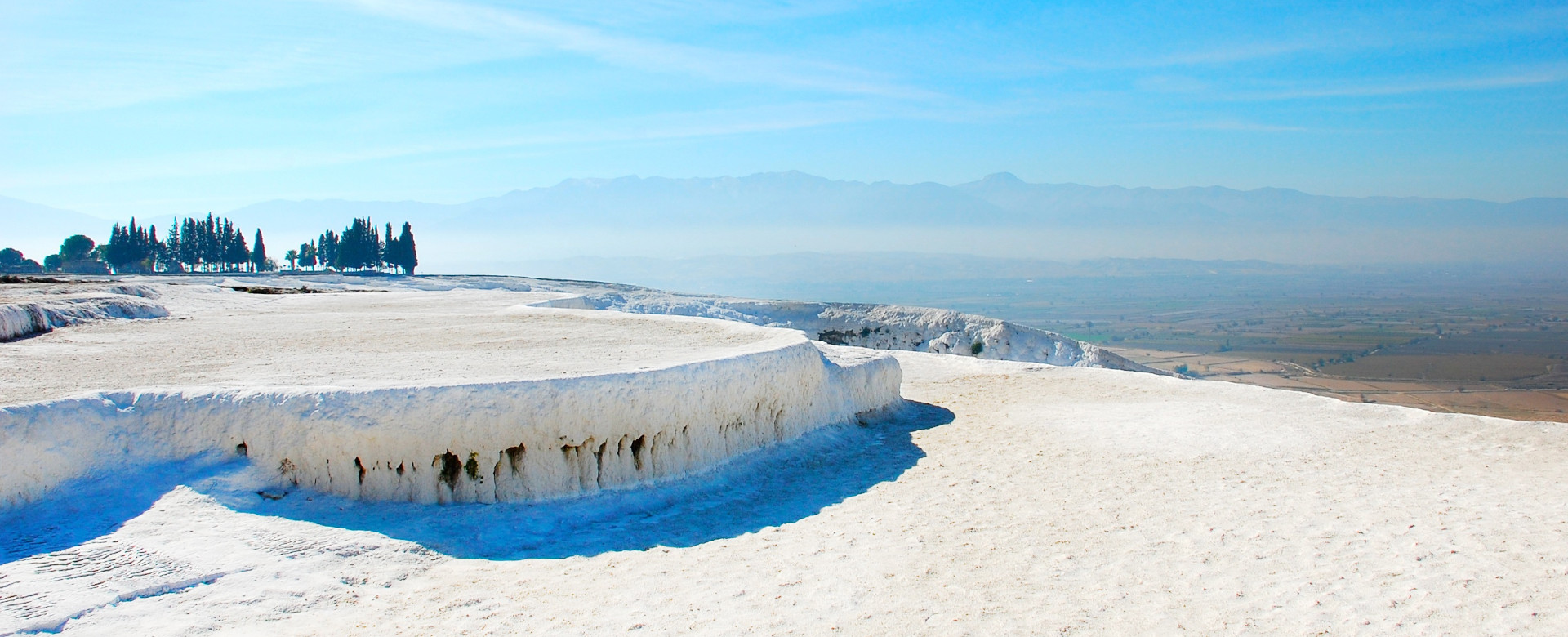
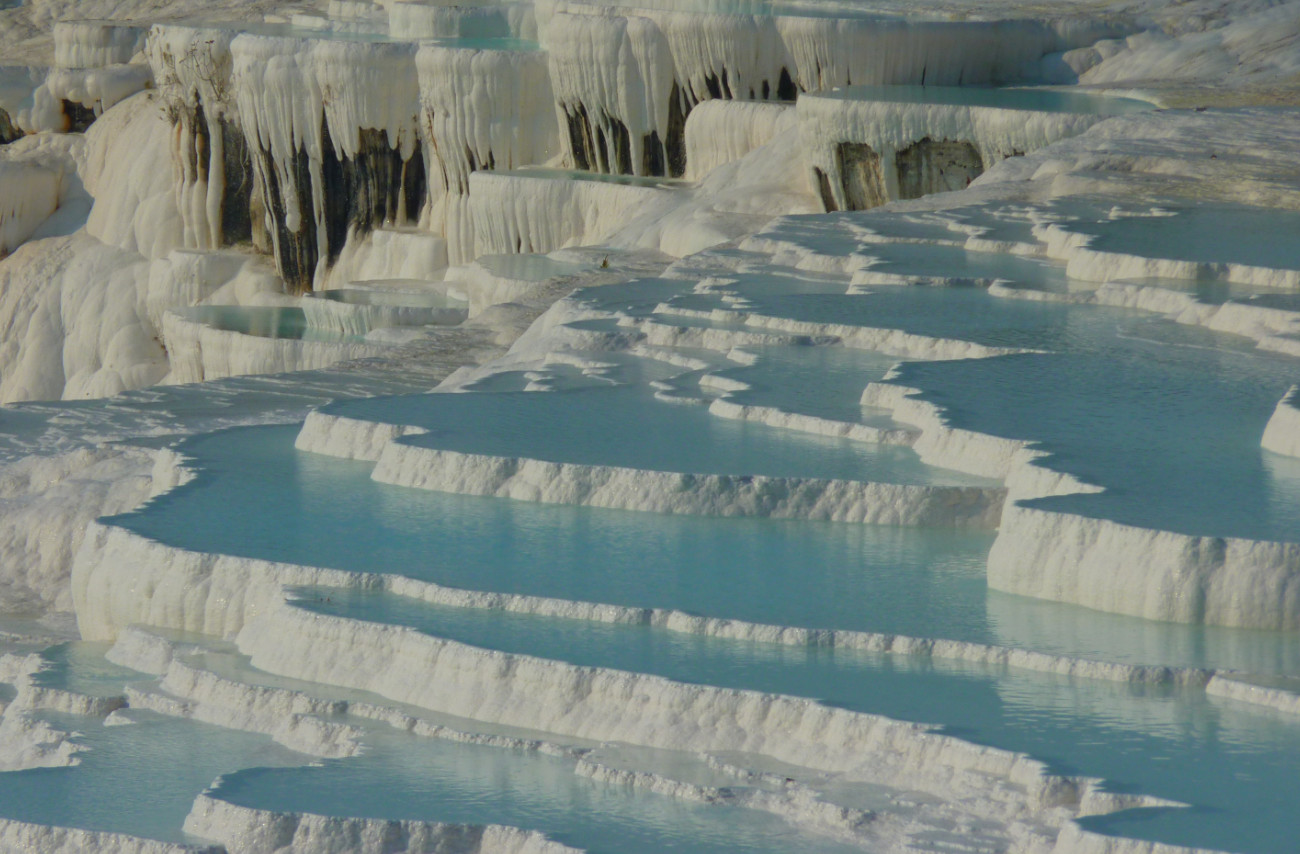
The dazzling white travertines of Pamukkale are a natural wonder formed by calcium-rich thermal waters, creating stunning terraces and formations resembling frozen waterfalls. Pamukkale is a place of healing, with its thermal waters historically renowned for their therapeutic properties. Walking on these snow-white travertines, formed by the thermal waters of Hierapolis, is an unforgettable experience. To preserve their natural beauty, the travertines are carefully protected. Swimming in the Antique Pool, also known as Cleopatra’s Pool, adds to the unique experience, offering warm, mineral-rich waters in a breathtaking setting.
Ancient City of Hierapolis
Situated just 18 km north of Denizli and within the same site as the Pamukkale travertines, the ancient city of Hierapolis is a “holy city” known for its temples and religious structures. Founded in the early 2nd century BC by Eumenes II of Pergamum, Hierapolis was named after Hiera, the wife of Telephus of the Attalid dynasty. Historically, its hot springs were a center of health and beauty, drawing people from across Anatolia. Visitors today can explore the Gymnasium, Pamukkale Observation Terrace, travertines, Martyrium & Church of Saint Philip the Apostle, Hierapolis Ancient Theater, Hierapolis Archaeological Museum, the Antique Pool, and more.
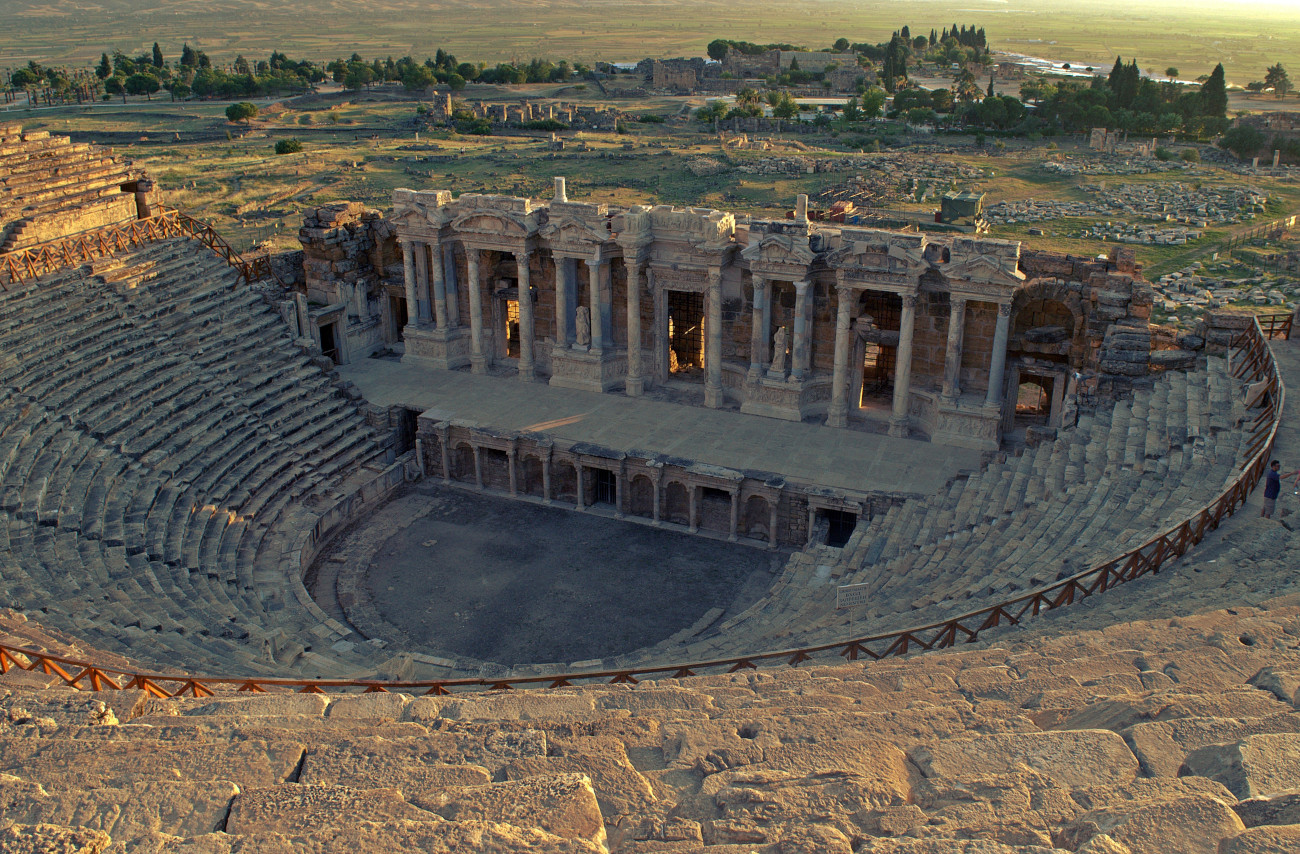
Hierapolis Ancient Theater
The ancient theater of Hierapolis, dating back 2,500 years, is a remarkable structure featuring mythological reliefs, a grand stage, and tiered seating. The theater’s sculptural reliefs depict various mythological scenes, including the birth of Apollo and Artemis, the music competition between Marsyas and Apollo, and the Gigantomachy. This theater is a testament to the rich cultural history of the region.
Antique Pool (Cleopatra’s Pool)
Dating back to the 2nd century BC and located next to the Pamukkale travertines in Hierapolis, the Antique Pool, also known as Cleopatra’s Pool, is believed to have been visited by the Egyptian queen herself. The pool is fed by warm thermal waters, maintaining a temperature of 36°C year-round, offering a soothing and historical experience.
The Roman Bath – Hierapolis Archaeological Museum
Built in the 2nd century AD, the Roman Bath in Hierapolis now houses the Hierapolis Archaeological Museum. The museum showcases a variety of artifacts, including sculptures, inscriptions, and reliefs, within its historic halls. The architectural features of the bath complex reflect the grandeur of ancient Roman design.
Pamukkale Natural Park
Pamukkale Natural Park, located at the entrance of Pamukkale, is a tranquil spot where visitors can relax by the pond, take a paddleboat ride, or enjoy the scenic beauty of the area. The park’s green spaces, thermal mud pond, and vibrant wildlife, including fish and geese, make it a delightful addition to any Pamukkale visit.
Seyir Tepesi
Seyir Tepesi, the largest thematic urban forest in Türkiye, offers family-friendly fun with its cafes, restaurants, picnic areas, zipline tracks, mountain coaster, and more. The forest’s 35-meter waterfall and the giant rooster statue are popular attractions, making it a perfect spot for a day out.
Denizli Cable Car and Bağbaşı Plateau
The Denizli Cable Car, a popular attraction throughout the year, transports visitors to the Bağbaşı Plateau, situated at an altitude of 1,400 meters. The plateau features bungalows, yuruk tents, restaurants, picnic areas, and adventure tracks, offering breathtaking views and fresh mountain air.
Karahayıt Hot Springs
The Karahayıt Hot Springs are a key attraction in Denizli, known for their red healing water and thermal mud, which reaches temperatures of 60°C. These natural treatments are believed to be beneficial for a range of health issues, including kidney stones, cardiovascular diseases, and skin conditions. The hot springs have been a center of thermal tourism for thousands of years.
Halıcı Ahmet Urkay Museum
The Halıcı Ahmet Urkay Museum in Denizli showcases 2,000 artifacts, including geological and ethnographical items, old coins, and manuscripts. The museum highlights the rich history and culture of the Pamukkale and Karahayıt regions.
Akhan Caravanserai
The Akhan Caravanserai, one of the last caravanserais of the Anatolian Seljuks in the West, dates back to 1253-1254. With its distinctive architectural features, including a square courtyard and a rectangular hall, the caravanserai is a significant historical structure and a glimpse into the past.
Çamlık Park
Çamlık Park, located just 3 km from Denizli city center, is a vast green space filled with Calabrian pine forest, walking and running paths, ponds, a zoo, and picnic areas. The park is a peaceful retreat offering visitors a chance to connect with nature.
Gözler Lavender Gardens
The Gözler Lavender Gardens, located 30 km from Pamukkale, are a vibrant and fragrant destination, especially during the blooming season from June to August. Visitors can purchase natural lavender products and enjoy the beauty of the fields.
Glass Rooster Statue
The Glass Rooster Statue, Türkiye’s largest glass sculpture, stands proudly in Denizli’s 15 Temmuz Delikliçınar Square. Made from 7,000 pieces of handmade glass, this statue is a popular spot for photos and a symbol of the city.
Denizli Atatürk House and Ethnography Museum
The Denizli Atatürk House and Ethnography Museum is a historic building dating back to the late 19th century. It served as a party building in the early Republic Period, and Mustafa Kemal Atatürk stayed here during his visit to Denizli in 1931. The museum displays ethnographic works and memorabilia related to Atatürk.
At My Land Traveler, we invite you to explore the natural beauty, rich history, and cultural treasures of Pamukkale and Denizli. Whether you’re marveling at the travertines, soaking in the thermal waters, or uncovering the secrets of ancient cities, a journey to this unique region is an experience of a lifetime.